Innovative plans to re-open Penley hospital backed by Plaid Cymru
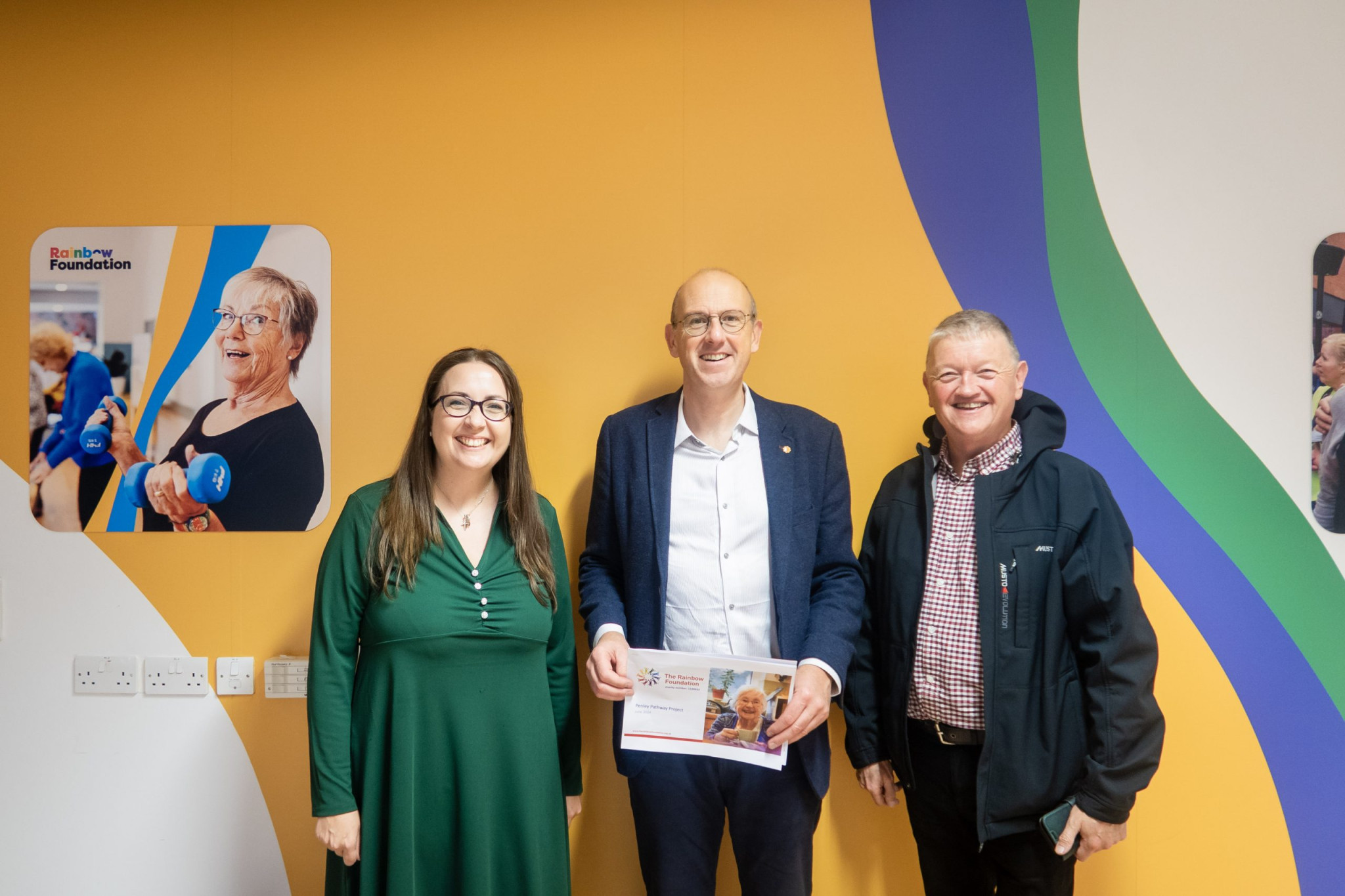
From left – Susan Ikin of the Rainbow Foundation, Llyr Gruffydd MS and Councillor Marc Jones.

Plans to re-open Penley community hospital by a local charity have been backed by Plaid Cymru’s north Wales MS.

Llyr Gruffydd visited the Rainbow Foundation main site in Penley, to discuss the future of the community hospital, which is next door to the charity’s Ageing Well Centre of Excellence

Penley Community Hospital was closed ‘temporarily’ last Christmas and Betsi Cadwaladr health board is undertaking a consultation on whether to close the site permanently.

Mr Gruffydd has been an outspoken critic of the decision, saying it was done without warning to either staff or patients. He also criticised the health board for closing community step-down facilities when the Maelor hospital was under such pressure.

Mr Gruffydd said: “The health board has not been straight with staff or the community over Penley – they’ve misled about the numbers of patients using the hospital when it closed and don’t seem interested in using community facilities such as this to ease pressure on Wrexham Maelor Hospital, where corridor care and lengthy delays for admissions has become the unfortunate and unacceptable norm.

“That’s why I was interested to visit Penley and learn more about the proposal by the Rainbow Foundation to take on the hospital and re-open it as a 12-bed facility that could complement the existing work being done on the adjacent site. This is a detailed plan that, incredibly, has been put to the health board back in June 2024 and gained clinical support. The plan would have reduced prolonged delays in hospital and reduced delays in transfers of care – directly addressing the acute problems facing the Maelor in terms of A&E and trolley wait times. 

“The intention would be to enable patients who don’t need to be in a district general hospital like the Maelor to be in a community-based rehabilitation and reablement centre closer to home. I’m at a loss as to why senior management at the health board did not take the proposal forward rather than making their decision to close overnight.

“We heard of case studies where an 89-year-old woman who was admitted to the Maelor after a minor fall spent a further 11 months there despite having no medical needs because of a lack of step-down provision in this part of rural Wrexham.

“Every year about 3,700 operations are cancelled at Wrexham Maelor Hospital – the BMA estimates about a third of planned operations are cancelled because of a lack of beds. This is because around one in six (17%) of those beds are occupied by patients who do not need to be in the acute sector. Community alternatives are vital and Penley, which serves a large area of south Wrexham can be a part of this.

“This proposal, called the Penley Pathway Project, seems to be a sensible way to re-open the hospital and make maximum use of the established rehabilitation services already operating on site.”

Mr Gruffydd added: “I would urge Betsi’s senior management to look in detail at this proposal – it could be an important piece in the bigger picture as we seek to address the very real pressures facing our NHS. If we don’t start thinking outside the traditional silos, we will fail the very many people who are falling between the gaps in terms of health. We need to reduce waiting times, improve recovery times and make greater use of these community facilities not mothball them.”

Seeing Our Integrated Model in Action

During her visit, the Minister spent time with our staff, volunteers and the older people who use our hub. She saw how our holistic, fully integrated model brings together re-ablement, care and wellbeing support, dementia services, community transport and opportunities for social connection; all under one roof.

Her reaction meant a great deal to us. As she said:

“What I’ve seen at the Rainbow Foundation today here in Penley in Wrexham is truly inspiring. The hub brings many important services together under one roof and it’s clearly making a big difference to people’s lives.

This support is empowering people to live as independently as possible and play an active role in their communities.”

These words reflect exactly what we strive to deliver: independence, connection and the chance for people to live well for longer.

Innovation That Makes a Difference

We were also able to showcase some of the pioneering programmes that are helping us achieve this, including:

Active Futures — our award‑winning falls, frailty and MSK programme, now expanding across North East Wales.
The outcomes speak for themselves:

  • £14.02 SROI
  • £1.2 million in system savings
  • 96% of participants improving their functional fitness
  • Frailty reversed for many

In My Place — our innovative combined rapid response and Future Care Planning model.

This programme is fully designed and ready to implement, with the potential to:

  • Deliver £6.5 million in NHS savings over three years
  • Support more people to die in their place of choice, with dignity and comfort

We believe passionately that innovation should always be rooted in what matters most to people — and these programmes are a testament to that.

People, Place and Prevention

Our integrated approach brings together everything older adults need to age well: practical support, health interventions, meaningful activity, community connections and access to services. Many people experience this at our hubs, but just as many access support through:

  • Community‑based Active Futures classes
  • Social Prescribing embedded across Wrexham GP surgeries
  • Targeted support delivered directly into people’s homes
  • Our community transport model, which removes barriers and ensures no one is left behind

 This whole‑system approach is what makes our work effective — and sustainable.

Supporting Wales’ National Priorities

What we do at Rainbow is closely aligned with key Welsh Government strategies such as Age Friendly Wales: Our Strategy for an Ageing Society and A Healthier Wales, both of which focus on prevention, community‑based intervention and integrated care.

Our approach also reflects national frameworks like the British Geriatrics Society’s CORE20PLUS5 framework for older people, ensuring we:

  • Prioritise the most deprived communities
  • Reach people at greatest risk of poor access or poor outcomes
  • Improve frailty, dementia, falls, multimorbidity and end‑of‑life care

Above all, we focus on tackling inequality and strengthening prevention, right where people live.

It’s one of the reasons we retain one of the highest Social Return on Investment scores in the sector — £15.73 for every £1 invested.

A Proud Day for Our Organisation

As our Chief Executive, Caroline Tudor‑James, said during the visit:

“Her visit shows the growing recognition of the power of community‑led innovation in health and social care. Our holistic model—from our Hub Model to Active Futures and In My Place—demonstrates what’s possible when prevention, integration and compassion come together. We’re proud to support the vision for a healthier Wales.”

This visit wasn’t just a milestone for us — it was a celebration of the people, partnerships and communities that make our work possible every single day. And we’re only just getting started.